Essential Generators Need a Constant and Reliable Fuel Supply
Would an Interruption to your Power Supply Cost You Too Much?
We rely on electricity to power the systems we use to deliver essential services. But, what happens in a power cut or if there is a problem with your supply? If interruptions to your power supply aren’t an option for your organisation, you need a reliable electric power generator and that means a reliable fuel storage tank.
Standby Fuel Tanks
Most standby generators use a sub-base fuel tank. A generator is usually sited directly on top of this type of tank. These tanks come in various sizes, depending on the anticipated generator runtime. Some of them are relatively shallow, providing as little as 8 inches of depth for fuel storage. Others can provide a depth of up to 40 inches.
Apart from the sub-base fuel tank, there may also be a day tank. These tanks are generally used to provide more storage for longer generator runtimes. However, there is no guarantee that any quantity of fuel stored in either the sub-base or day tank will be enough to power a generator throughout a longer power cut or other interruption to electrical supply.
Don’t Run Out of Fuel
Many organisations that need an interrupted electricity supply deploy an extra, larger capacity fuel tank to provide another layer of security. This is standard practice for organisations like datacentres, hospitals and essential administration buildings.
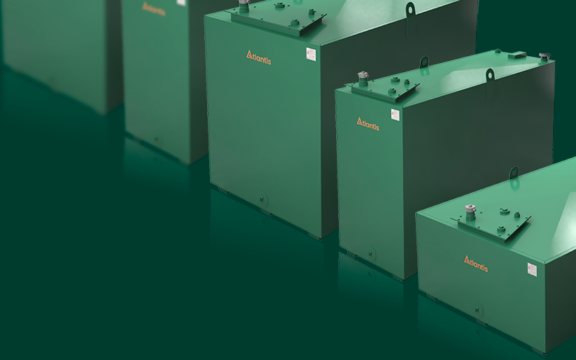
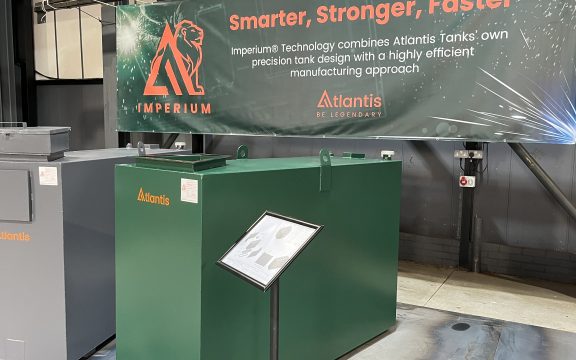
Atlantis Tanks supply industry-leading fuel storage tanks. Most organisations choose a tank with a capacity of between 5000 litres to 50000 litres to meet their needs. We stock a standard range in popular sizes, but can also design and build bespoke tanks with a capacity of up to 100,000 litres. Read more about bespoke tanks and our manufacturing lead times.
Bunded Steel Standby Fuel Tanks
Our steel storage tanks are bunded to prevent spillages during overfills and to protect against costly and hazardous leakage. In the event that fuel is lost from the internal tank, it is contained in the outer, weatherproof bund.
Fuel Storage Regulations
Under the control of Pollution (Oil Storage) Regulations 2001 operators and owners must provide safe and environmentally-friendly fuel storage. All commercial storage facilities in excess of 200 litres in capacity must have a ‘second containment’ capable of holding at least 110% of the maximum tank capacity. Our bunded steel storage tanks are fully compliant with these regulations.
Fuel Contamination and Fuel Polishers
Tanks are sometimes fitted with fuel polishers to keep the fuel conditioned inside the tank. This is good practice as the fuel in a standby tank is often kept for longer than it is in the primary supply tank. The quality of diesel fuel becomes progressively worse the longer it is stored.
Generators run better on uncontaminated diesel fuel. If diesel fuel has been in storage for longer than a few months there is a danger of contamination.
The most common form of diesel fuel contamination is caused by water. All tanks are vulnerable to forming condensation on the interior walls over time. As well as damaging the valuable fuel, when water gets into the fuel, it can lead to corrosion of the tank. This corrosion can lead to further contamination of the fuel. Water contaminated fuel is also at risk of diesel bug – organisms that grow within the liquid and cause even further damage. Read more about diesel bug.
Contaminated diesel can damage your tank, filters, fuel lines and your generator, reducing the life of equipment, negatively impacting efficiency and increasing the risk of failure.
What to do now
If you’d like to find out more about how a standby fuel storage tank from Atlantis Tanks could help you avoid an interruption to your power supply, talk to our team. We’re always ready to provide impartial advice and talk through the best options for your organisation.